
Turboline is Agentic Streaming Infrastructure
From analyzing streams to publishing them, to enabling raw stream delivery and payment for live data
Published March 25, 2026
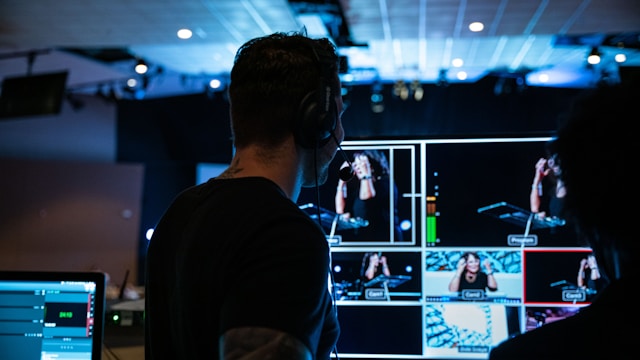
How We Got Here
When we started Turboline, we were building a "chat with your data" product. Through early conversations with developers and teams, we realized the real problem was not querying data on demand. It was knowing when something important happened the moment it did.
That realization drove us to build TurboStream: a realtime streaming engine with TSLN, our token compression protocol that lets AI agents process high-frequency data at a fraction of the cost of conventional LLM pipelines. We published the whitepaper, ran benchmarks, and proved the architecture. The core thesis held up. You can deliver sharp, contextual AI analysis on live data without burning through your token budget.
But the more we worked with live data streams, the more one question kept surfacing: once an agent understands what is happening in real time, why stop at alerting? Why not publish?
The Gap We Kept Seeing
Traditional media was built for a different era. Large teams, slow editorial cycles, distribution systems designed around scarcity. That model made sense when producing and distributing content was genuinely hard. It no longer is.
AI has collapsed the cost of content generation. Realtime data infrastructure has collapsed the latency between event and story. The only thing separating a live data stream from a live media product is a layer of agents connecting the two.
That layer is what we have spent the last year building.
Analysis to Publication
The extension of our work is straightforward in hindsight. If your agents can monitor a live stream and generate a signal, a summary, an alert, an insight, then with the right output layer they can generate a segment, a post, a broadcast clip, or a radio update just as easily.
Our founding team has worked inside livestream media companies. We have seen how content gets made at speed and where the architecture breaks down. The bottleneck is never talent. It is always the tooling: slow pipelines, high coordination overhead, infrastructure that was not designed for continuous autonomous output.
Turboline is built for that gap. Our agents do not sleep, do not miss a story, and do not need a budget approval to cover a breaking event. They monitor live data streams, generate broadcast-quality content, and distribute across audio, video, and text continuously.
We also ran the Turboline x IIMS college sports media hackathon, which sharpened our conviction. The next generation of media builders is not waiting for legacy tools to catch up. They want infrastructure that works at the speed of the event.
From Publication to Streaming Commerce
The same live stream layer that creates autonomous media also becomes the foundation for raw stream delivery. Once you can analyze and publish an event in real time, you can also provide the underlying websocket and media-over-QUIC feeds that power other applications, platforms, and partners.
That means Turboline is not only about generating content. We are building the plumbing that makes live data accessible, secure, and billable. Teams can subscribe to event feeds, pay for raw telemetry and media, and trust a single platform to handle ingestion, agentic analysis, content output, and stream delivery.
Examples include:
- a sports platform buying live sensor and camera streams alongside AI-generated highlights
- a newsroom subscribing to breaking event feeds while also publishing live commentary
- an enterprise app ingesting operational websocket telemetry and paying per stream
- a media partner consuming secure QUIC video/audio feeds for downstream distribution
What This Means for the Product
This is not a pivot. The technology, the team, and the core vision are the same. TSLN still compresses token costs on high-frequency streams. TurboStream still runs the realtime ingestion and analysis layer. What changes is where the output goes and what it looks like.
We are extending the platform to support:
- Continuous content generation: agents that turn live data into structured, publish-ready outputs across formats
- Multi-platform distribution: audio, video, and text delivered to the right channel at the right moment
- Streaming infrastructure as a service: low-latency websocket and media-over-QUIC delivery for raw live feeds
- Payment facilitator for raw streams: usage-based access, billing, and settlement for live data consumers
- Editorial workflows without editorial overhead: human-in-the-loop controls where they matter, autonomous execution everywhere else
The name for all of this is agentic media infrastructure. A line that moves fast, carries signal, and never goes dark.
What Comes Next
We are opening up early access to teams building in this space: sports broadcasters, news organizations, content platforms, and independent media builders who want to move at the speed of live events.
If you are building here, investing in it, or covering it, get in touch. We are just getting started.